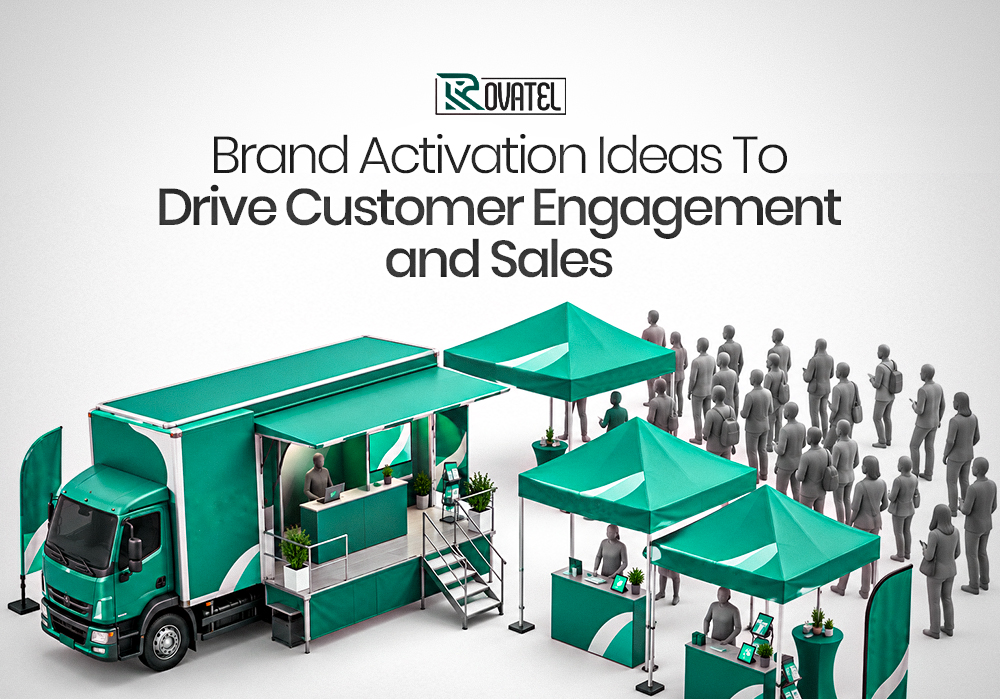
Getting people to notice your brand is one thing, and getting them to stop, interact, remember you, and eventually buy is another. This is where brand activation comes in.
A brand activation turns your brand from something people simply see into something they can experience. It gives your audience a reason to interact with your business and creates opportunities to build stronger connections.
A successful activation does not have to be expensive or complicated. What matters is whether it gives people a meaningful reason to engage with your brand.
What Is Brand Activation?
Brand activation is a marketing strategy that encourages people to interact directly with a brand. It can happen online, offline, or across multiple channels.
For example, a brand might organise an interactive event, create a social media challenge, offer product samples, host a pop-up experience, or launch a campaign that encourages customers to take part.
The goal is simple: Move people from seeing your brand to experiencing it. When people actively interact with a brand, they are more likely to remember the experience. They may also develop a stronger connection with the business.
Why Does Brand Activation Matter?
Traditional advertising can put your message in front of thousands of people. However, attention does not always lead to action.
Brand activation creates a more active experience. Instead of simply telling people about your product or service, you give them a chance to interact with it.
As a result, brand activation can help businesses:
- Increase brand awareness
- Create memorable customer experiences
- Encourage audience participation
- Generate leads
- Increase product trials
- Build customer relationships
- Drive sales
Most importantly, the activation should focus on what your audience wants. When the experience is useful, fun, or interesting, people have more reason to take part.
Here are 10 brand activation ideas that can help increase customer engagement and drive sales.
1. Create an Interactive Pop-Up Experience
A pop-up allows customers to experience your brand in a physical space. It could be a temporary store, product showcase, photo booth, tasting station, or interactive display.
For example, a beauty brand could create a pop-up where customers test products and receive personalised recommendations. This gives people a reason to stop, interact, and learn more about the brand.
You can also encourage visitors to share their experience online. In this way, the activation can reach people beyond the physical location.
2. Offer Product Sampling or Free Trials
Sometimes, customers simply need an opportunity to experience a product before buying it. Therefore, product sampling can remove some of the uncertainty around a purchase.
A food brand could offer free tastings. Similarly, a skincare company could provide product samples, while a software company could offer a free trial.
However, the experience should not end after the trial.
Once someone has tried the product, guide them towards purchasing with a special offer, discount, or simple call to action.
3. Turn Your Campaign Into a Challenge
People enjoy participating in activities that are fun, simple, and easy to share. For this reason, a social media challenge can encourage customers to create content around your brand while increasing your reach.
For example:
- A fitness brand could create a seven-day workout challenge.
- A fashion brand could create a styling challenge.
- A food brand could ask customers to share their favourite way to enjoy a product.
Give participants a clear action and a reason to take part. In addition, you could offer prizes or discounts to encourage more people to join.
4. Create a Customer Giveaway With a Twist
Giveaways can attract attention. However, a basic “like, follow, and share” campaign may not create meaningful engagement.
Instead, make the giveaway part of an experience. Ask customers to answer a question, share a story, complete a challenge, or create something related to your brand.
For example, you could ask: “Tell us how our product would make your day easier.”
This creates a conversation rather than simply collecting likes. At the same time, it also allows the brand to learn more about its customers.
5. Build a Personalised Experience
People are more likely to engage when an experience feels relevant to them. Personalisation does not have to be complicated. For instance, you could help customers choose the right product based on their needs.
A fashion brand could offer a style recommendation. Likewise, a skincare brand could create a quick skin-type quiz. A financial brand could provide a personalised budgeting assessment.
The more relevant the experience feels, the more useful the interaction becomes.
6. Partner With the Right Creators
Influencer marketing can become more engaging when creators are involved in the activation itself. Instead of simply paying a creator to post about your product, invite them to participate in an experience that their audience can follow.
For example, this could include:
- A product launch
- A pop-up event
- A social media challenge
- A workshop
- A behind-the-scenes experience
The right creator can help introduce your activation to an audience that already trusts their recommendations.
However, reach alone is not enough. The creator should be a natural fit for your audience
7. Take Your Brand Into the Real World
Not every activation needs to happen online. In fact, offline experiences can help brands create memorable face-to-face interactions.
Consider street activations, campus campaigns, mall experiences, office visits, and community events.
For example, a beverage brand could set up a mobile sampling station in a busy area. Similarly, a telecommunications company could create an interactive experience at a major event.
A fitness brand could also organise a free outdoor workout. The key is to meet your audience where they already spend time.
8. Turn Customers Into Part of the Campaign
Your customers can become some of your strongest brand advocates. Therefore, encourage them to take part in your campaign by sharing their experiences, stories, reviews, or creative content.
You could create a branded hashtag and feature selected customer content on your social media pages. This can create social proof while also making customers feel like part of the brand.
More importantly, potential customers get to see real people interacting with your business.
9. Connect the Activation to a Sales Offer
Engagement is valuable. However, your activation should also support a clear business goal. If your goal is to increase sales, give people a reason to buy after interacting with your brand.
For example, you could offer:
- An activation-only discount
- A limited-time bundle
- A gift with purchase
- Early access to a product
- A special referral offer
For instance, someone who attends your pop-up could receive a discount code that expires within 48 hours. This creates urgency. At the same time, it gives the activation a clear path from engagement to purchase.
10. Create a Memorable Launch Experience
Launching a new product does not have to mean simply announcing it online. Instead, give people a reason to experience the launch.
You could:
- Host a small launch event
- Create a countdown campaign
- Offer exclusive previews
- Invite selected customers to test the product
- Create an interactive online experience
The aim is to turn the launch into an event rather than just another announcement.
When people have something to experience and talk about, your campaign can generate attention beyond your original audience.
How to Create a Brand Activation That Works
A successful activation starts with a clear goal. Before planning the campaign, ask yourself what you want people to do.
For example:
- Do you want more people to try your product?
- Do you want to generate leads?
- Do you want to increase sales?
- Do you want to grow your audience?
- Do you want to create user-generated content?
- Do you want to build brand awareness?
Once your goal is clear, build the experience around it.
Your activation should also be easy to understand. If customers need several instructions before they can participate, they may lose interest. Instead, keep the experience simple, relevant, and rewarding.
Most importantly, make sure the activation feels connected to your brand. A creative idea may attract attention. However, the experience should still show customers what your brand stands for
How to Measure Brand Activation Results
An activation should not be measured by attention alone. Instead, look at the results that connect directly to your campaign goal.
Depending on the type of activation, you could track:
- Number of participants
- Product trials
- Leads generated
- Website visits
- Social media engagement
- User-generated content
- Coupon or promo code usage
- New customers
- Sales generated
- Return on investment
These metrics can help you understand whether the activation created real business value.
For example, a campaign may generate thousands of social media views but very few sales. On the other hand, another activation may reach fewer people but generate many new customers.
Therefore, looking at the right metrics is important. High visibility does not always mean high business value.
Final Thoughts
The best brand activations give customers a reason to do more than look. They invite people to participate, experience, share, and connect.
Whether it is a pop-up, product trial, social media challenge, creator partnership, or interactive event, the goal should always be the same: create an experience that people remember, and that moves them closer to your brand
However, creativity alone is not enough. A successful activation needs a clear objective, the right audience, a strong idea, and a clear path from engagement to action
At Rovatel Media, we help brands turn marketing ideas into experiences that connect with audiences and support real business goals.
Do not just tell people about your brand. Give them a reason to experience it.