Introduction
We live in what many marketers refer to as the attention economy, where Traditional Advertising is everywhere, from billboards and TV commercials to social media and mobile apps. Every day, people are exposed to thousands of ads on their phones, laptops, and feeds. Due to this constant exposure, many individuals have become desensitized, often ignoring these advertisements altogether.
As a result, brands now face a significant challenge: how can they stand out when everyone is trying to sell something?
Storytelling in marketing is transforming this approach. Instead of pushing products through loud promotions, brands are learning to share stories that people genuinely want to hear. At Rovatel Media, we believe that marketing should foster real relationships between brands and their audiences. Through creative strategy and thoughtful storytelling, brands can go beyond simple promotion and create memorable messages.
The Limits of Traditional Advertising Today
For decades, traditional advertising was the primary way companies promoted their products. Businesses relied on television commercials, billboards, radio ads, and print campaigns to reach customers.
However, the landscape has changed. Today, many people experience ad fatigue, seeing so many ads that they begin to ignore them. This phenomenon is often referred to as “banner blindness,” where individuals automatically disregard promotional content online.
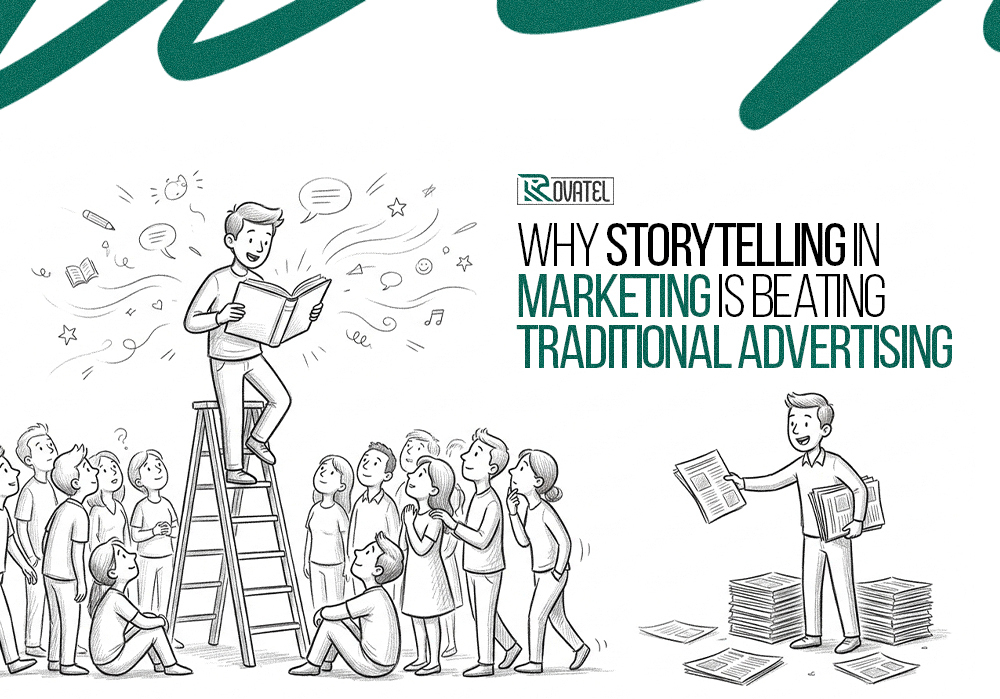
Another challenge with traditional advertising is that it typically functions as a one-way communication method. Brands speak to audiences, who often feel disconnected and uninvolved.
In contrast, modern marketing strategies emphasize interaction and connection. Consumers want to understand a brand’s purpose; they are interested in its story, mission, and impact.
As a result of this shift, many brands are moving away from straightforward product promotion and towards more meaningful communication.
What Is Storytelling in Marketing?
Storytelling in marketing involves using narratives to convey what a brand represents and why it is important. Instead of simply stating, “Our product is the best,” brands illustrate how their products enhance people’s lives. A compelling story typically includes key elements such as:
– A relatable character
– A challenge or problem
– A solution
– A transformation or outcome
For instance, a company might share the story of a customer who overcame a difficulty by using their service. Another brand could narrate the founding of the company and the inspiration behind it.
This approach is known as brand storytelling, which emphasizes the human aspect of business. When executed effectively, stories help audiences grasp the brand’s values, its purpose, and the impact it seeks to achieve.
Why Storytelling Works Better Than Traditional Advertising
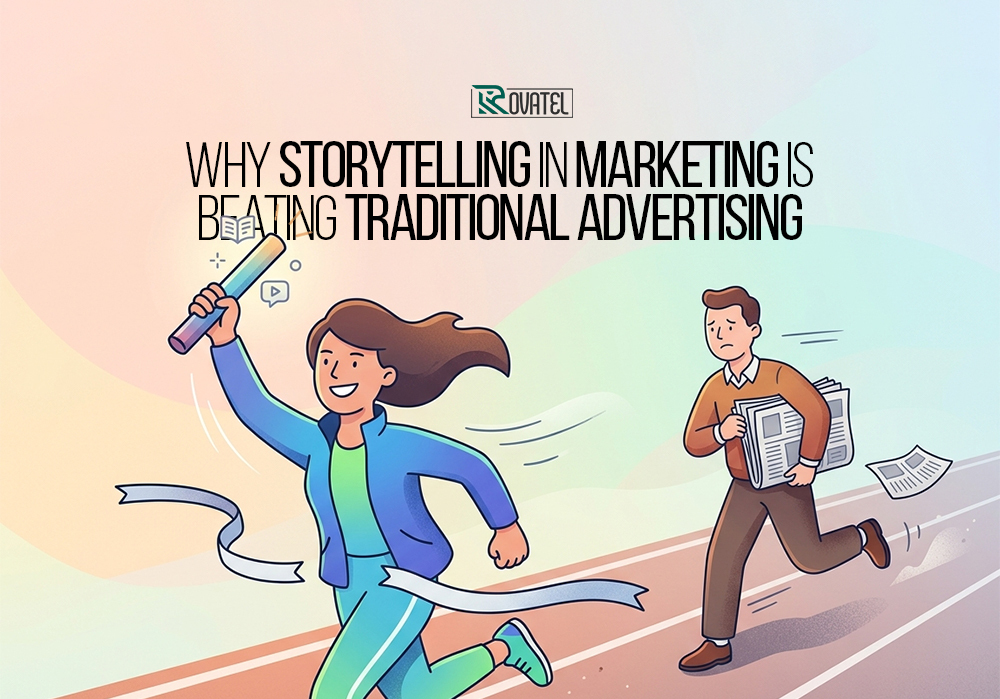
Why does storytelling outperform traditional advertising today? The answer lies in how people respond to stories.
1. Stories Create Emotional Connections
People remember stories because they evoke emotions. This is the foundation of emotional marketing. When a story inspires feelings of hope, curiosity, or inspiration, consumers are more likely to remember the brand associated with it.
2. Stories Build Trust
Customers are increasingly cautious about their purchases and who they trust. A clear brand narrative helps people understand a company’s mission and values. This transparency fosters natural trust.
3. Stories Improve Engagement
A strong storytelling marketing strategy encourages conversation. People are more likely to comment, share, and discuss stories than to engage with direct advertisements.
4. Stories Make Brands Memorable
Facts can be quickly forgotten, but stories linger in our memory much longer. When brands communicate through storytelling, their messages become easier to recall.
This explains why many marketers are shifting their focus from traditional advertising to storytelling when designing campaigns; stories simply resonate better with modern audiences.
Key Lessons Brands Can Learn From Story-Driven Marketing
- Focus on audience experiences instead of product features
- Build authentic and relatable brand narratives
- Use storytelling across blogs, social media, and campaigns
- Prioritise emotional connection instead of aggressive selling
- Develop a clear and consistent storytelling strategy
When these principles guide marketing efforts, communication becomes more meaningful and memorable.
Conclusion
Marketing is evolving rapidly. While traditional advertising still has its place, it is no longer sufficient on its own.
Today, audiences seek brands that communicate with honesty, creativity, and purpose. They want stories that reflect real experiences and values.
As a result of this shift, storytelling will play an increasingly important role in modern marketing. Brands that focus on meaningful narratives will stand out in crowded markets. With the right creative strategy, storytelling can transform ordinary marketing messages into powerful connections.
At Rovatel Media, we help brands bring their stories to life. By combining creativity, strategy, and insight, we assist businesses in communicating clearly and building stronger relationships with the audiences they serve.